The system scans the buyer’s documents, pulls out the data, and fills in the application. Then it prepares the contracts and the mortgage package and holds the apartment for the buyer. Managers no longer type in data or chase paperwork by hand


Tera sells apartments in new developments. It works with several developers at once and handles each deal end to end, from the buyer’s application to the signed contract.
When a buyer takes out a mortgage, the manager has three jobs at once: create the application in the CRM, draft the assignment agreement, and put together the document package for the bank. All of it draws on the same buyer data: passport details, SNILS (social insurance number) and TIN, co-borrower details, and, if the buyer pays with maternity capital (a state family benefit), the certificate. The package also needs the developer’s consent, and every bank and residential complex has its own forms.
Managers prepared all of this by hand, copying passport, SNILS, and TIN details into the CRM field by field: a single application took 15–20 minutes. Then they assembled the package and drafted contracts for the specific bank and residential complex. And when applications poured in, the worst happened: the same apartment got booked twice.
Managers spent their time on paperwork instead of selling, and any mistake in a contract or the document package pushed the deal back.
Tera needed the data to flow into the application automatically, the contracts and document package to come together without a manager, and the apartment to stay on hold for the buyer while the paperwork went through.
The buyer uploads their passport, SNILS, and maternity capital certificate, and the system scans the documents and fills in the application. It takes 2 minutes instead of 15–20.
The selected apartment is held for the buyer for 15 minutes. If applications for it come in at the same time, whoever applies first gets the reservation.
For every combination of bank, residential complex, and down payment, the system picks one of nine templates and fills it in with data from the application.
The completed application lands in Intrum and is automatically assigned round-robin across seven managers. If the CRM or Yandex Disk fails, the system resends it.
Let’s follow one application step by step: what the buyer sees, what the system does, and what the manager gets.
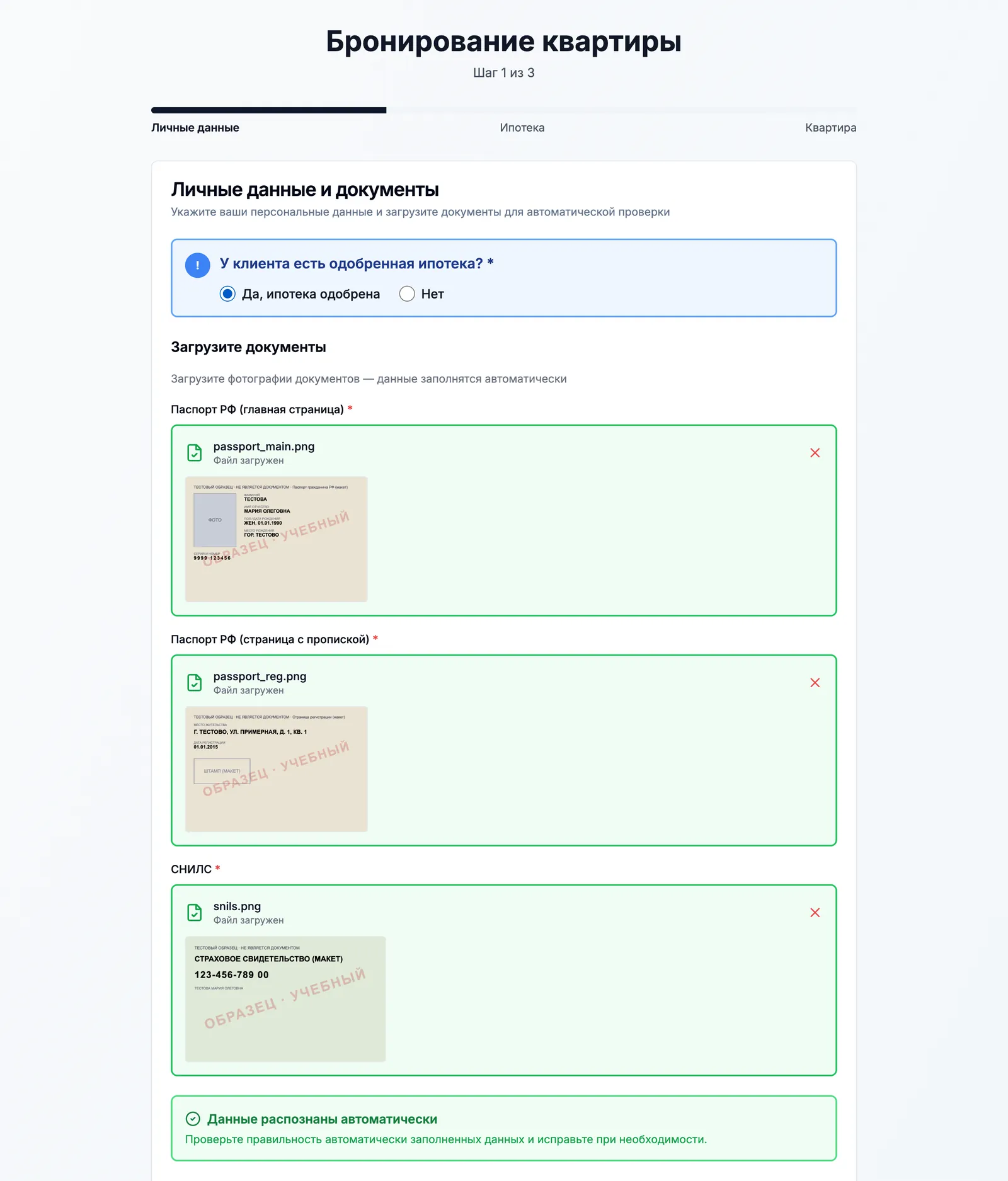
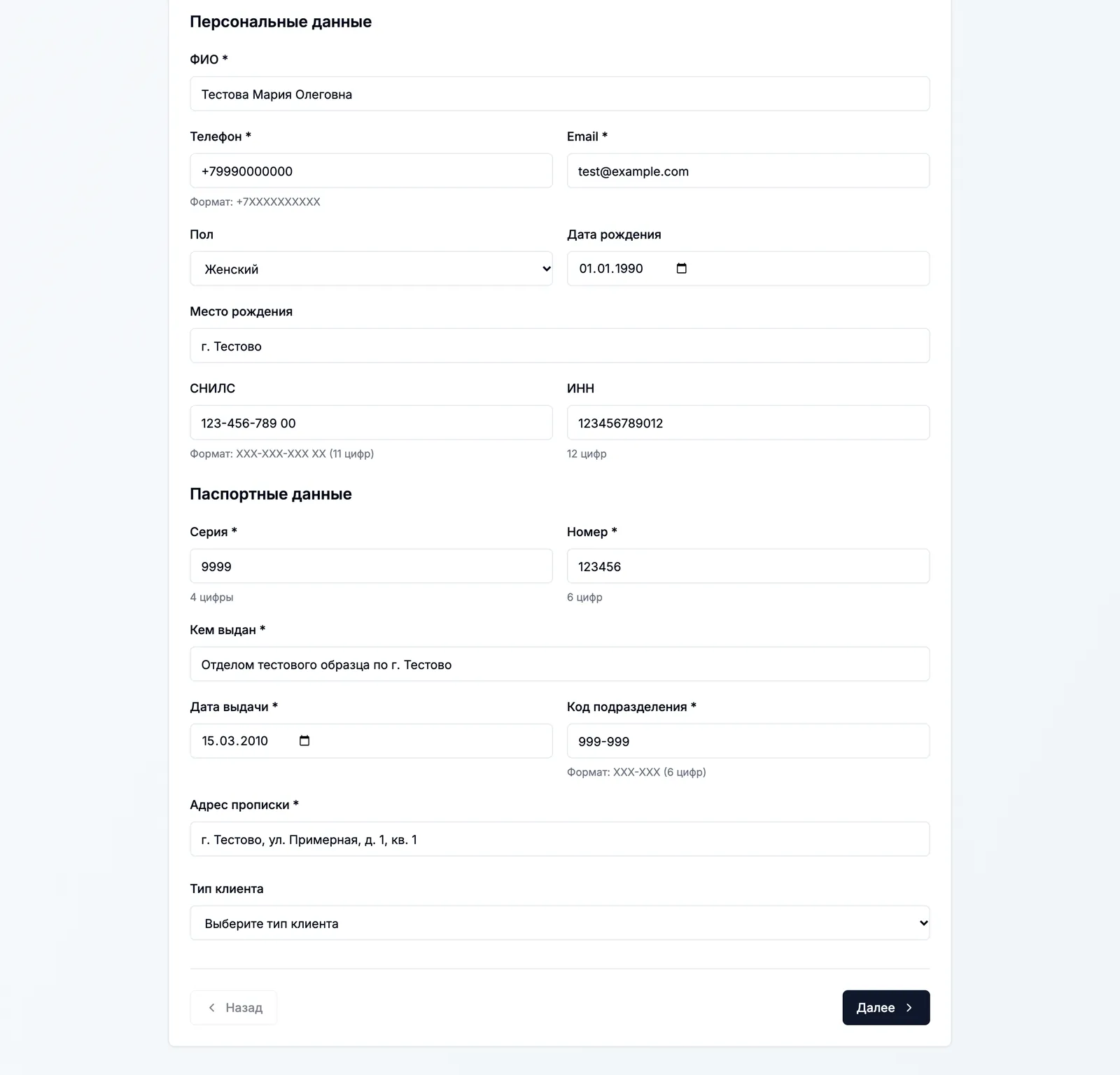
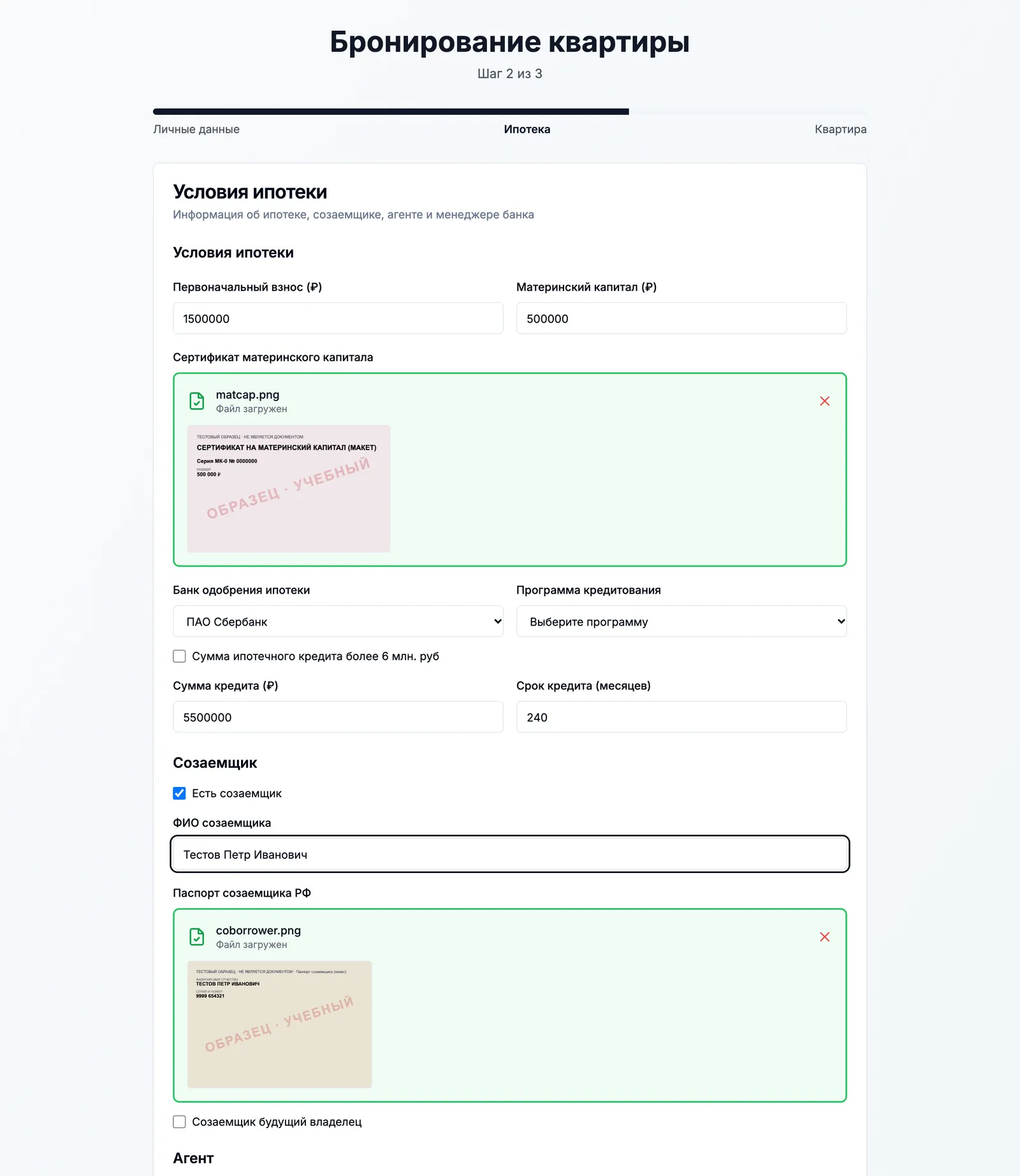
The buyer opens the form and, in step one, attaches their passport, SNILS, and, if they have one, a maternity capital certificate. The fields fill in automatically. They confirm their phone number and consent to data processing with a single tap in Telegram. In step two, they enter the mortgage details and the parties to the deal; in step three, they pick an apartment from the list of available units.
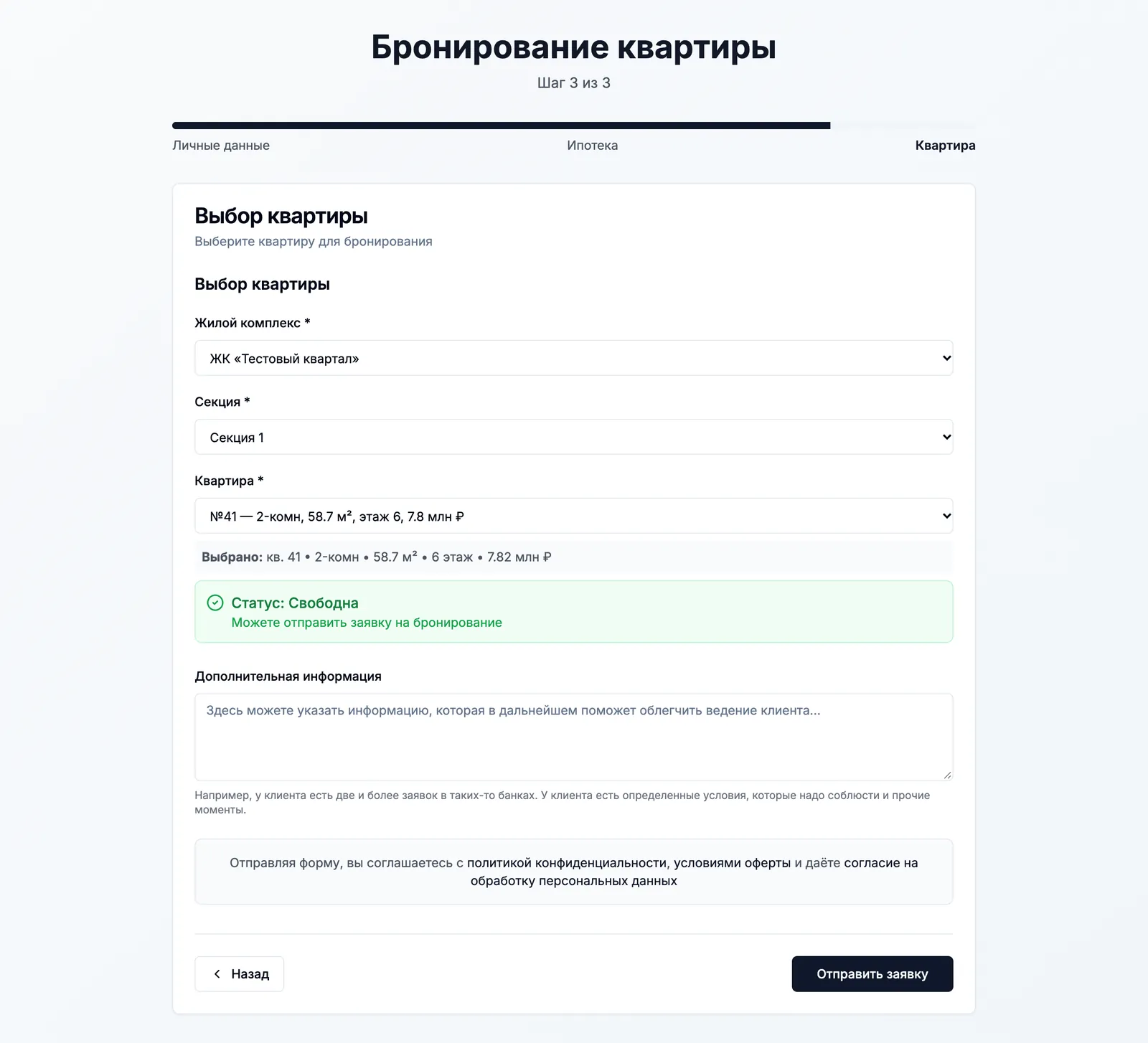
While the buyer fills out the form, the system scans their documents and extracts the data. If a document can’t be read, the application goes to a manager for manual review, so no data is lost. The system pulls available apartments from the Intrum availability grid and refreshes the list in the background, so buyers only see what’s actually available. Reservations are stored in the system itself, not in the CRM, so if several buyers apply for the same apartment, only the first application gets the reservation.
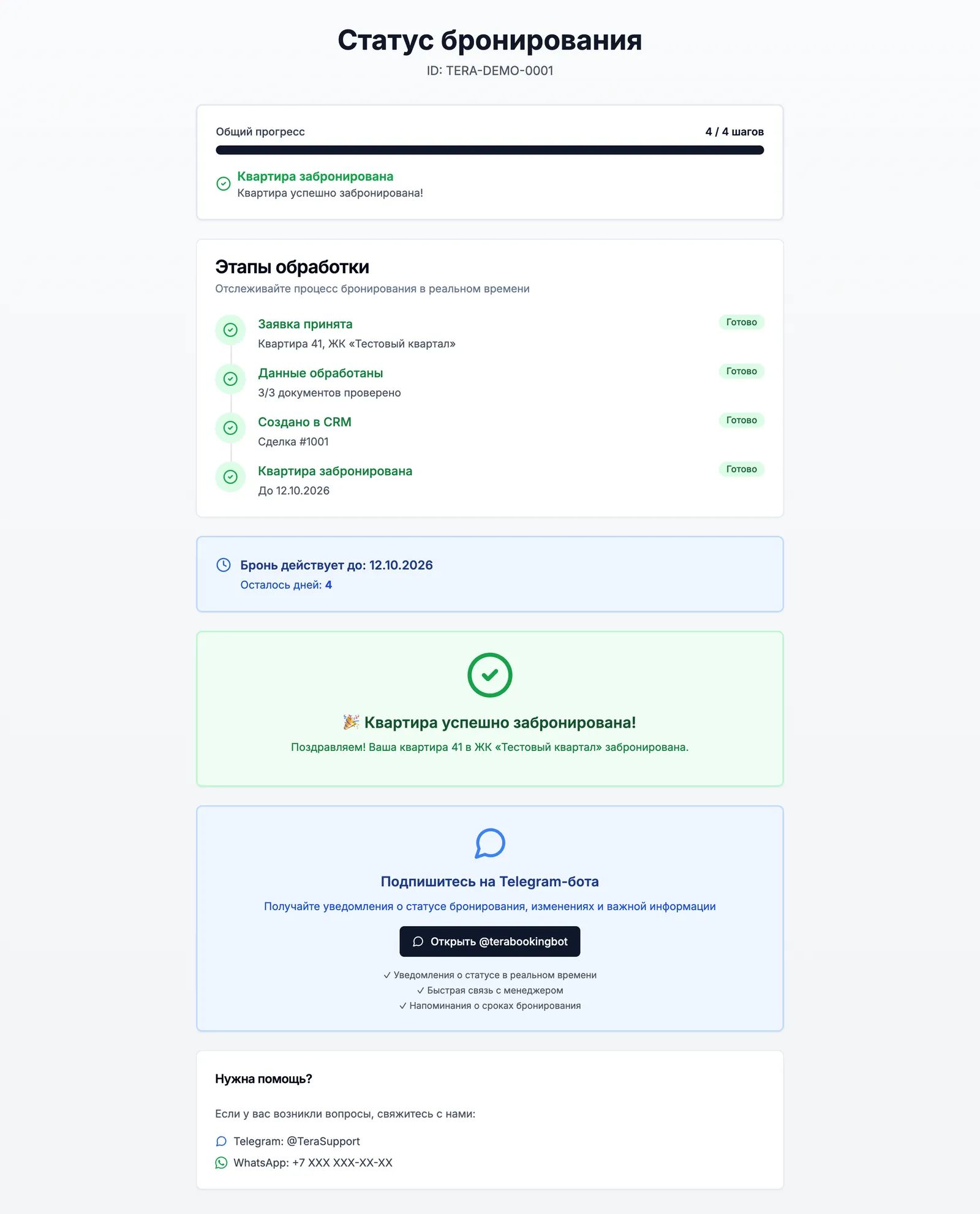
The manager sees the finished application right in Intrum, the same system they work in every day. The buyer’s documents sit in folders the system created on its own, and links to those folders are saved in the application record; the links can also be sent to Telegram on request. The system has already built the assignment agreement and the developer’s consent from the template for that bank and residential complex and filled them in with the application data. All that’s left for the manager is to check the package and sign it.
External services such as the CRM or Yandex Disk sometimes respond with a delay. To make sure no application gets lost, it goes into a queue, and every 5 minutes the system resends any that are stuck. Managers don’t have to check by hand whether an application went through.
Also used: Celery + Redis — background jobs and queuing · docxtpl — fills in contract templates · Yandex Disk — stores buyer documents · Telegram Bot API — buyer confirmation and manager notifications
Managers stopped keying in data by hand and now spend their time selling, not doing paperwork.
A similar solution works for any business where managers copy data from customer documents into a system, assemble a document package for every deal, or reserve something in limited supply.
We build solutions like this around your needs: turnkey AI products, AI agents and automation, integrations, and data.
Our servicesTell us about your project — we’ll talk it through and show you how to make this work for your business

We use cookies and Yandex Metrica to improve our website. Privacy policy