Every day, the system gathers posts about retail chains from video platforms, review sites, forums, social media, and messaging apps, tags each one by topic and sentiment, scores its virality, and sends Telegram alerts about the posts that need attention

Global Import is a wholesale company based in Krasnoyarsk. Working with retail chains means the team has to keep a close eye on the conversation around Russia’s major grocery chains: which videos are racking up views and where negativity is surfacing.
Much of that conversation happens in user-generated content: product reviews, customer feedback, complaints, and videos about deals and promo codes. It’s spread across dozens of platforms, with a steady stream of new posts every day.
Monitoring was manual and haphazard. Off-the-shelf media monitoring tools are expensive and aren’t built for Russian retail.
The client needed posts across every chain and platform collected automatically and sorted by topic and sentiment — and the team alerted right away to the ones worth a closer look.
The system collects posts about the selected chains on a schedule — from YouTube, TikTok, VK, Telegram, RuTube, Dzen, review sites, and forums — so no one has to browse the platforms by hand.
When a post gets unusually high likes, views, or engagement, the system flags it as an anomaly, assigns a priority so the team knows where to start, and sends a dedicated Telegram alert with a link.
Every post is tagged with a topic, sentiment, and virality score, and data from all platforms lands in a single database, so the team sees all 15+ chains at a glance.
The data is available in a web dashboard and through a Power BI connection, so the team can build reports and spot trends for marketing.
Here’s how it works step by step, from collecting posts to the morning digest.
Throughout the day, the system crawls the platforms for new posts about the tracked chains. Each post is saved with its likes, views, comments, and publication date. Processing runs in batches, and the digest shows how many records were processed and whether anything failed.
If a post includes a video, the speech is transcribed first. Then the AI model identifies the topic, sentiment, and keywords. Topics come from a predefined list that includes promotions, negative reviews, product quality, service, and product selection. A separate score from 1 to 10 rates how viral the post looks. That way, a positive promo and a product-quality complaint never end up in the same stream.
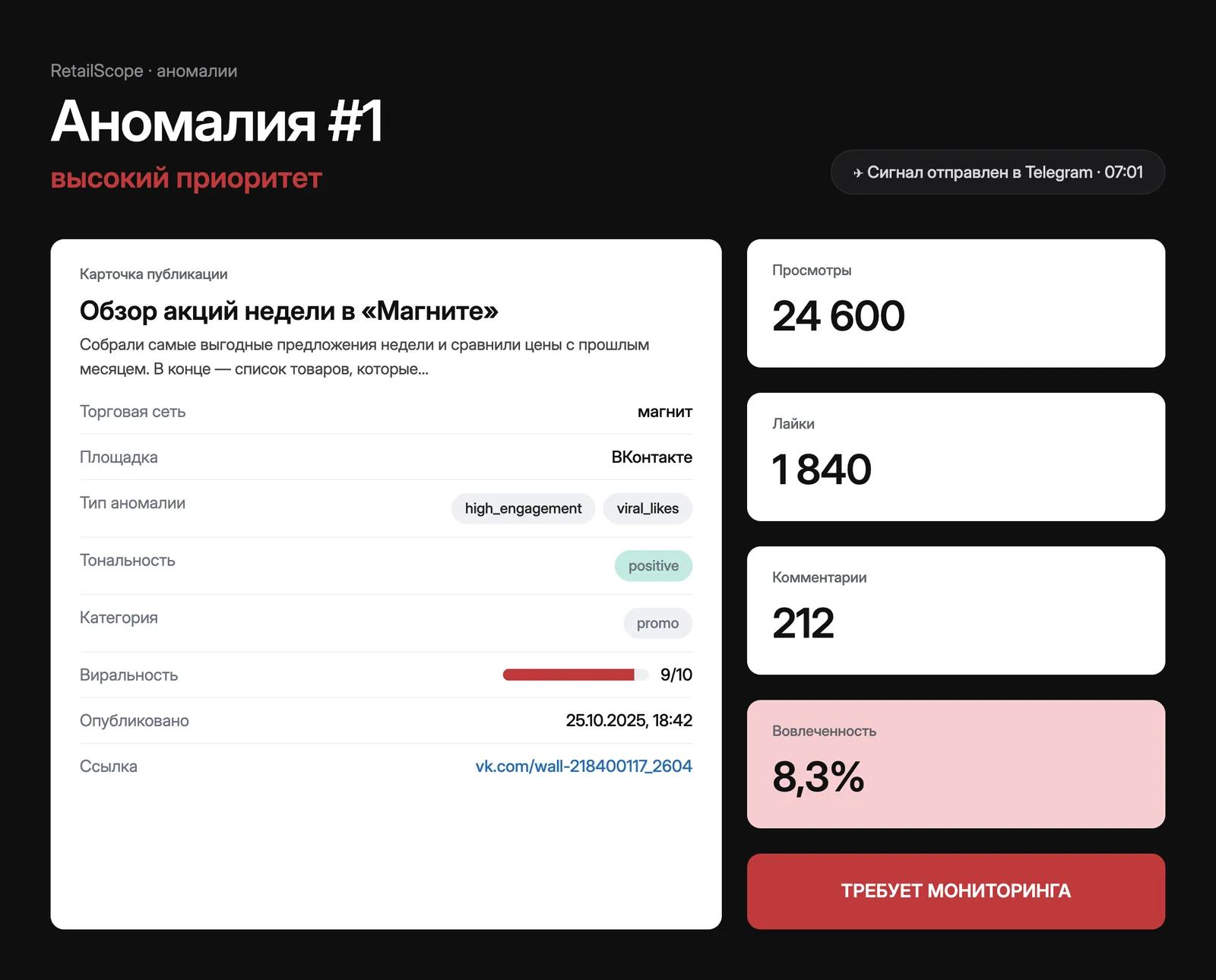
For each anomaly, the system builds a card: chain, anomaly type, engagement, virality, sentiment, category, title and description, likes, views, comments, date, and link. At the bottom, the post is marked “needs monitoring.” The team uses the card to decide whether to respond.
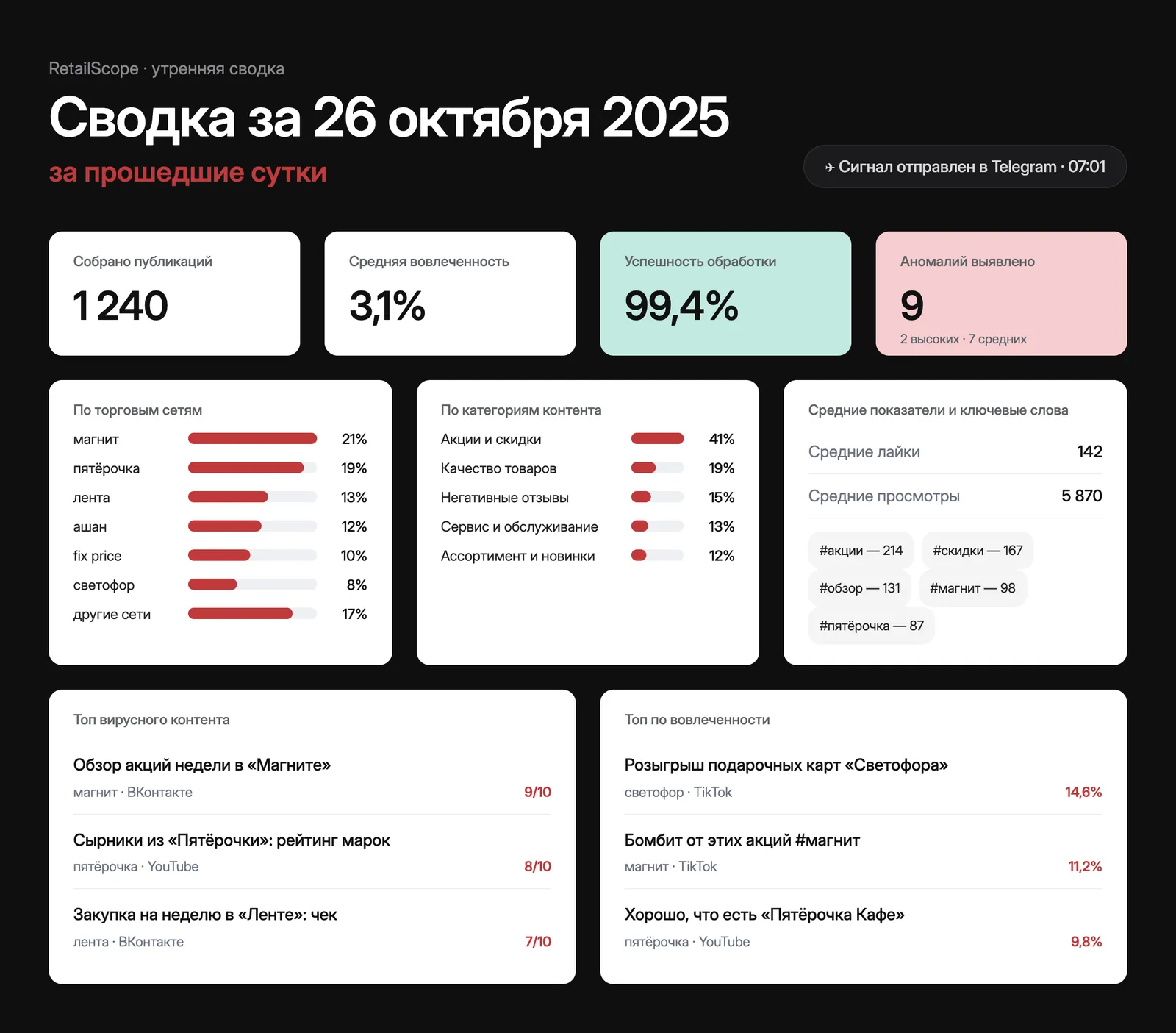
Each morning, a digest of the past 24 hours arrives in Telegram: overall stats, a breakdown by chain and topic, top viral content, top content by engagement, keywords, and the number of anomalies by priority. The web dashboard lets the team browse and filter the same data.
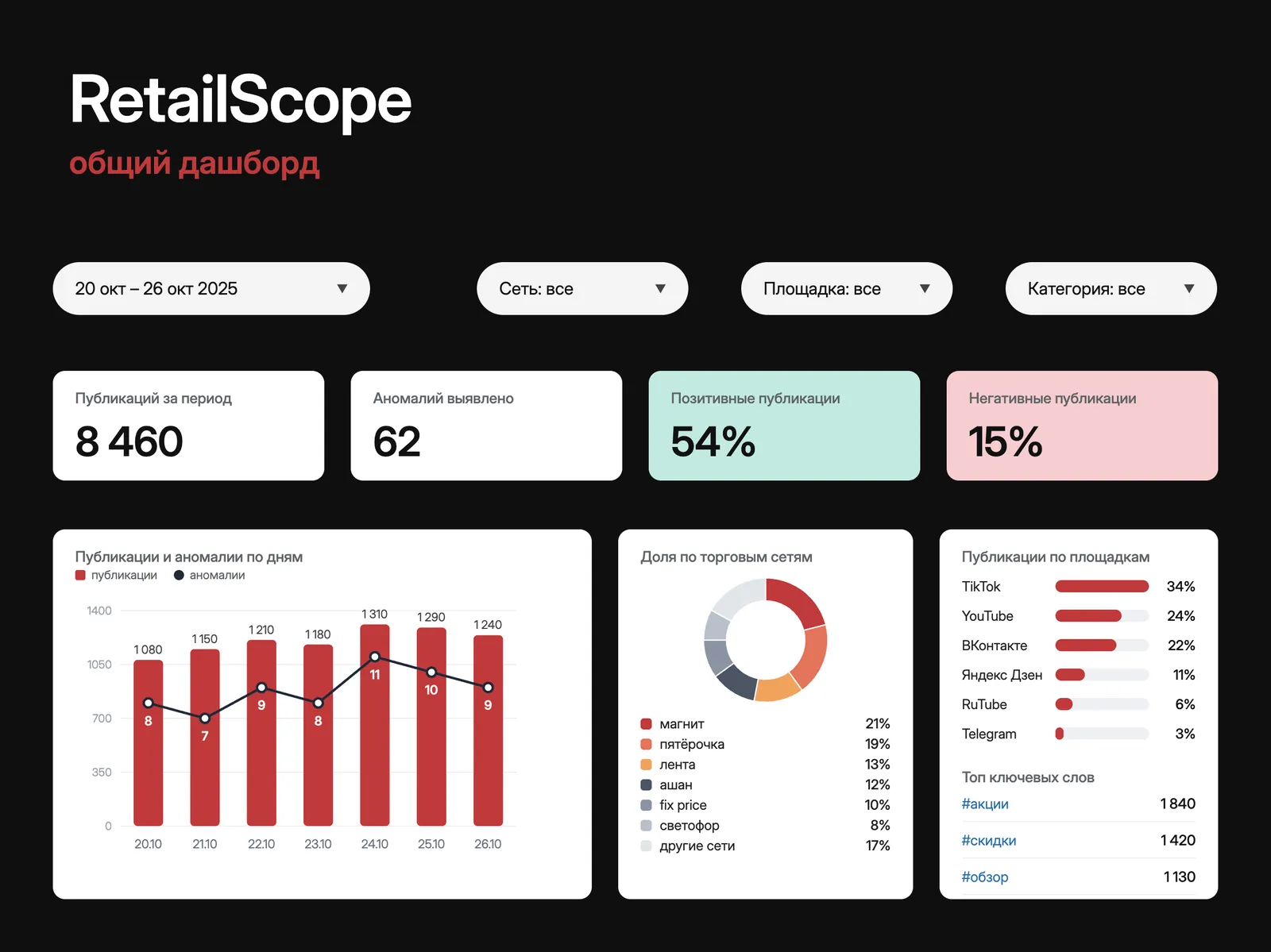
Also used: Telegram Bot API — digests and alerts for the team · Power BI connectors — data export for reporting
The team has a clear view across all chains and gets alerts about important posts every morning — no manual browsing required.
A similar setup works for any company whose brand or category gets written about and filmed a lot — too much to track by hand.
We build solutions like this around your needs: turnkey AI products, AI agents and automation, integrations, and data.
Our servicesTell us about your project — we’ll talk it through and show you how to make this work for your business

We use cookies and Yandex Metrica to improve our website. Privacy policy